
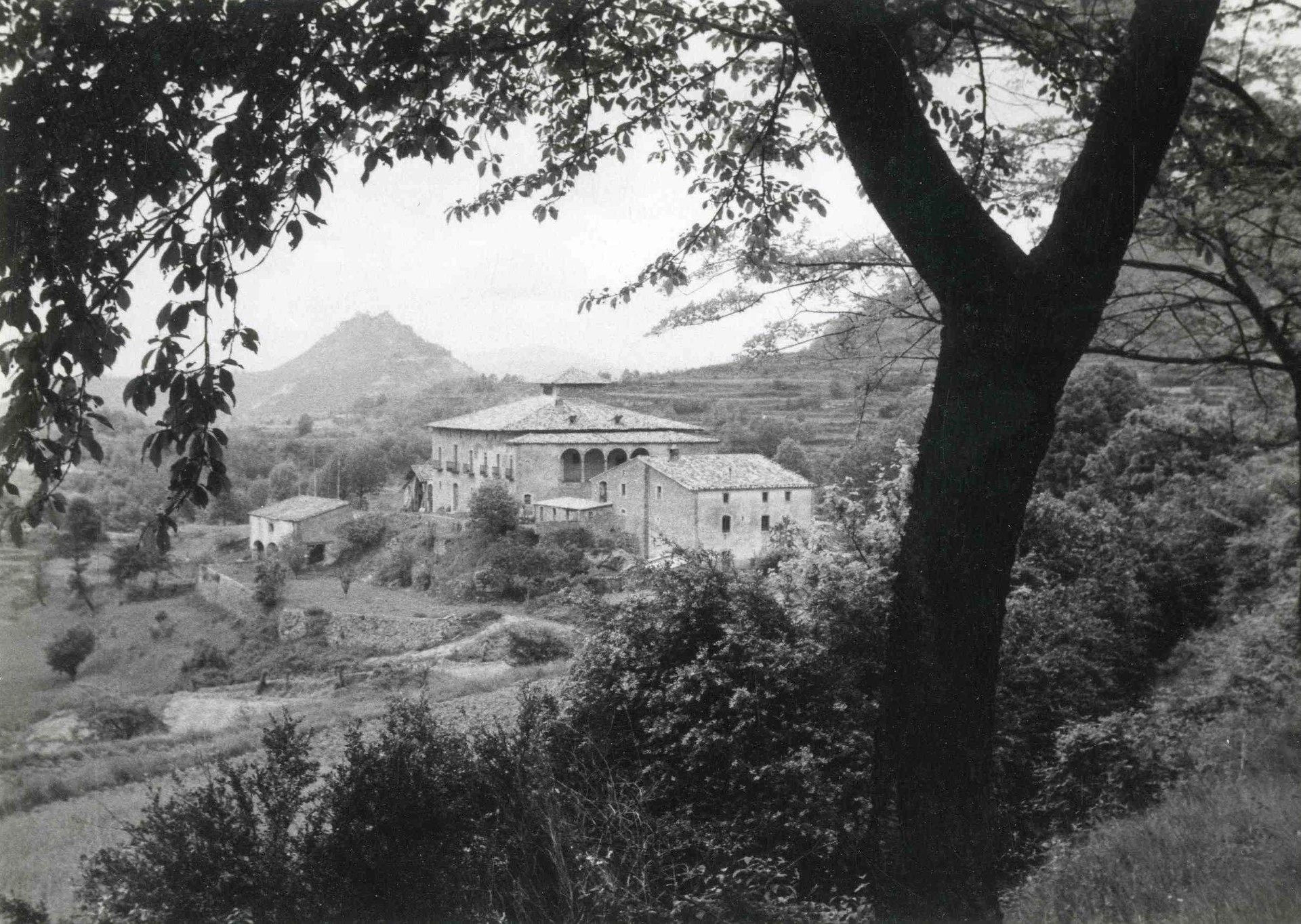
History
Bisaura or Besora, two names converging in a single place, bear witness to a rich and diverse past. Its name, of Basque origin, resonates with deep roots in a land inhabited since the Neolithic period by the ancient Basque settlers of the Pyrenees.
BASSA-URI-A, in its etymology, translates to 'city of the forest', evoking the density and majesty of the woods that cover this region. Over time, Bisaura underwent a phonetic evolution that eventually transformed it into Besora.
This valley, a corner of immense human interest and captivating beauty, stands as a living testament to history. Villages like Sant Quirze de Besora, Santa Maria de Besora, Vidrà, Ciuret, Sora, and Montesquiu weave this human mosaic that shapes this unique territory. Each village, each corner, tells its own story and contributes to the indescribable charm of this land.
Beginnings

In the late 9th century, between Santa Maria de Besora and Vidrà, the first stone of Mas Pujolons was laid. The Pujolons (or Pujalons) family worked these lands for five hundred years, experiencing both times of prosperity and adversity. They faced wars, the Black Death, and the battles for the defense and reconquest of Islamic territories, while the farmhouse established itself as one of the most important houses in the area.
On May 5, 1258, Ramon de Besora and his wife Blanca, counts of the Besora castle, honorably recognized Ramon (Raimundus) Pujolons and officially granted him Mas Pujolons for his dedication and service.
Mas Clarella
In the 15th century, during the War of the Remences (a conflict between nobility and peasantry), Pere Pujolons and his wife, Marquesa del Noguer, married off their daughter Francina to a young man from Ripoll. His name was Jaume Clarella.
This was an unusual marriage. Francina had brothers, and by tradition, the firstborn was expected to inherit the family properties. However, this was not the case here. According to the documents we have consulted, Jaume worked at Mas Clarella as a day laborer, earning the trust of the masters and the affection of their daughter. We believe Francina and Jaume married for love. All the facts we have about this union confirm it.
Francina's brother, the firstborn, renounced the inheritance of Mas Pujolons in exchange for inheriting Mas Noguer (another family property), as detailed in the marriage settlements they signed.
From their wedding day, May 4, 1466, Francina and Jaume became the heirs of Mas Clarella and, among other things, a quarter of the winery's wine and the harvest of that year and the following ones (confirming that wine was already being produced on these lands).
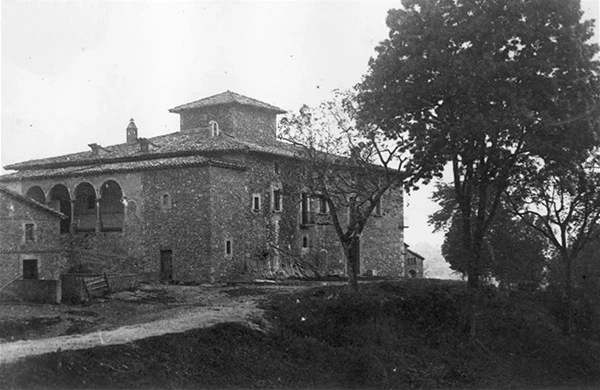
With this marriage began the saga of the Clarellas, who inhabited the house in the Bisaura valley and worked the lands until the year 1970, when Pilar Clarella left the house following an accident on the farmhouse stairs. The last of the Clarellas passed away in 1977 at a residence in Vic.
The Carlist Stamps
Another historical event from the year 1874 links Mas Clarella with the printing of stamps intended to finance the Carlist army. In the early 19th century, a marriage united two of the valley's great families: the Clarellas and the Ferrés.
A granddaughter from this union was Mercè Clarella Alibés, who married Joan Vidal de Llobatera (a prominent Carlist politician and deputy). During the Third Carlist War, first at Mas Ferrés and later at Mas Clarella, Carlist stamps were printed to be used as payment for the acquisitions and needs of this army's soldiers.
Present Day
In the 1980s, and especially from 2013 onwards, Mas Clarella entered a crucial restoration phase. First, the Barrado family (from Barcelona) and later the Call family (from the United States) rehabilitated the farmhouse.
The house was recovered, attempting to rebuild what had existed during its moments of greatest splendor, and the terraces that had been without vines for over a century were replanted. Brad Call and his wife Teresa Jensen have carried out a comprehensive rehabilitation project for the farmhouse and created a project for the production of magnificent mountain wines.
CLARELLA. LEARN MORE